Somewhere, right now, something in the statistical nightmare we call reality just said, “Oops. Time’s up.” I haven’t got a clue what that something was because there are just too fucking many options. Statistics, as we talked about last time, aren’t about individual events or, importantly, events that affect individual people. Statistics deal with massive populations and even more massive numbers of occurrences. It, along with its biological partner, Evolution, doesn’t care – at all – about an individual.
You mean nothing.
In fact, it’s probably less than that.
So, pulling the reins back a bit, our statistical discussion from last time was talking about how, for all of us, our step onto the slippery slope leading to our demise is both a fault – if you’ll permit me to assign blame – of the billion or so generations of our ancestors that stretch back to the dawn of time coupled with the very actively dangerous world in which you sit reading this bathed in radiation that, at best, helps you sleep poorly. We will all have one thing – one thing – that starts the cascade of other things that leads to our demise. You may encounter that one photon that tips a cell into melanoma. One grain of sugar that triggers your diabetes. Twinkie anyone? A fall that breaks your hip (a very popular way to die, statistically) and, if you’re over fifty – FIFTY, gives you a 30% chance of dying within a year. Or it could just be a brake failure on the Number 8 bus that sends it careening into a Bangkok canal with you plastered on the front end.
Before we get going here, I would like to state that modern medicine can do a very good job at fixing things – broken arms, some cancer, many infections, and vaccine preventable diseases – but is just so-so at treating things – diabetes, cardiovascular issues, etc. But that’s just because there is more money in a treatment than in a cure.
That Something, whatever it is, gets all of us. Consider for a moment that if modern medicine could cure all disease, stop physical and cognitive aging before the decline sets in, and come up with a way that makes people eat well and exercise, then the human lifespan would still only be 300 years – statistically – because of accidents.
Instead, modern medicine, uses statistics to trick, cajole, and coerce us into taking pharmaceuticals that, statistically speaking, may do exactly bupkis for you. But really boost the bottom line. They use statistics – the statistics of large populations – to govern what they do at the individual level. It’s important to hear what they are saying, but understand what they are saying.
For example, cardiovascular (CV) event risk, is presented by your doctor as an individual risk of suffering a CV event over a ten-year period. For a mid-60s male with what is now considered mildly elevated cholesterol the statistical likelihood of a CV event of any kind is about 12% (range 10% – 14%) over a ten-year period. In fact, since you’re owning up to your mortality, you can calculate your own risk factor if you have your numbers. At the same time, for our hypothetical patient, the ten-year all cause risk of death averages about 7% anyway.
So, your doctor says, “Take this and call me if you have any side effects.” He looks at you over his readers like some latter-day Marcus Welby. “It will cut your chances of dying from a CV event by 25%.” You think Wow! 25%! That’s massive! Gulp. Which is exactly what your doctor was hoping for. What you should have asked is “25% of what?”
A side note. I had this very conversation with my doctor some eleven years ago. A conversation from which said doctor had to walk out of the examination room in frustration. He returned a short while later and apologized for being so imperious. I told him it was his job to be imperious, but it was my job to ask questions. He ended up going to work in a public, free clinic where there weren’t so many questions. So, you’re welcome, I guess.
If you take a CV death likelihood of, say 9% (big range here based on studies), and that 7% all cause risk, and turn them into numbers it means that in any given year 7 people will die but only a fraction of deaths will be due to CV events. Now, if a given treatment promises a 25% reduction, then we’re really talking about reducing your risk by a fraction of one.
Which at long last brings us to our final destination: Economics.
Oh, shit! You say.
But this is the part of the game where you actually have a say in what your – your – future has in store for you. Let’s grab Adam Smith’s Invisible Hand and walk into the Garden of Utility. Utility is a micro-economic concept that is as micro as they come. It refers to the subjective value that you attach to anything. From fancy coffee, to all the highly personal data you give away to Facebook to use it for “free”, to whether it’s alright to stay at a Four Seasons when the Ferrari needs a new head gasket; you place – consciously or not – a value on every choice you make.
If I wanted to see snow for a week, I might walk outside into the 95F/80%RH morning I’m having right now and say: “Shit, yeah”, plop thirty-two Benjamins on the counter, and wing away to someplace in BF Northern Canada to soak up the cold. But I might not be willing, or able, to plop down $3,300 for the same experience. The difference in my evaluation is what’s known as Marginal Utility. You can consider Utility to be your overall perception of a choice and Marginal Utility to be how your perception changes as the features change.
You make these choices every day.
The process is decision – value – options – cost. Plain and simple.
Back in the doctor’s office, your medical practitioner walks in the room, removes her ermine robe, looks you in the eye and says, “You’ve got cancer.” Sometime in your past a wayward neutrino zipped through your body and clipped a dividing cell on the way through cleaving a critical nucleic acid at exactly the wrong time and in exactly the wrong place. That is statistics. You grabbed the statistical stick from the wrong end and now you’re stuck with it.
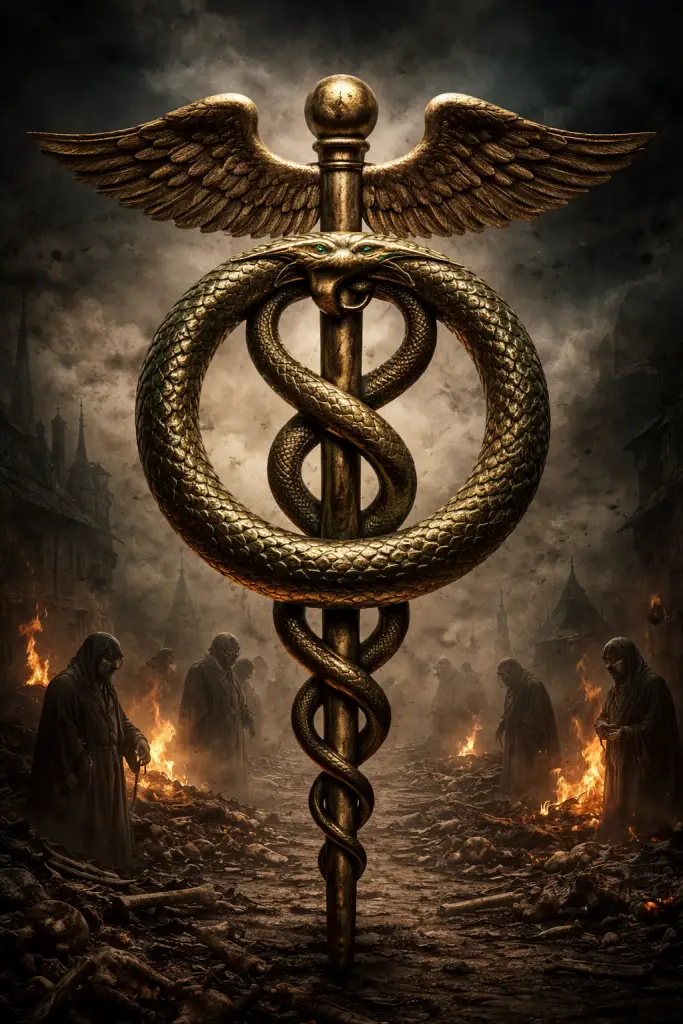
At this point most people think the decision is what treatment they need to get. But, in reality, the decision is “What’s important to me?” A decision you should be making now, if you haven’t already done so. The value then becomes what am I willing to pay – not necessarily in money – to realize that decision. Your options are the treatments and if and how they would support your decision. The costs are the difference between the options – again, not everything is about money – and the value of your decision. Ouroboros, much?
It all boils down to how you respond when statistics strike.
Is it more important for you to have a life free from treatments and weekly doctors’ appointments if they’re only able to promise you, statistically, an extra year? Or is it better to use that first year for fun and games and just bag the last year? Very personal decisions. And, very specific to the actual conditions you find yourself in.
There is, of course, a final complicating factor. Just because you’re forced to decide what to do about one statistical occurrence, statistics hasn’t gotten all “Oh well, I guess we’re done here.” It is still out there gunning for you. While you do something about one thing there is no guarantee that you still won’t end up soaking wet stuck to the grill of a bus.
There is a silver lining to this particularly dark cloud. That is, the older you get, the less likely it will be that any one thing gets you. It’s more likely that all of the other things will get you first.
That’s your “silver lining”?
Hear me out. When you find out that, say, you have high blood pressure, you can respond to that early – in a way appropriate to you – and your response to that one event will have a cascade effect on some the other events that may end up happening to you, like high cholesterol, and reduce the later impact of those other things. Life’s weird like that.
In the end, though, y’all gonna die. No way around that. The decisions you can make now affect what else happens to you between now and then. There was a time when you weren’t. There’s a time coming when you aren’t. Between those two times are all the options and choices that inform your decisions.
Whatever you decide, just promise me you’ll stay away from the Number 8 bus in Bangkok.