There’s an old saying that there are only two certainties in life: Death and Taxes. The first item, Death, it’s position in the punchline is the core of the joke. The second item, Taxes, tops the list because it’s as bad as death, but comes every year. I, being 1) poor, and 2) formerly reasonably smart, have managed to evade both items on the list for the past decade or so. Sadly, I must report that my dodging days are done. At long last, a couple weeks ago, I got the bad news.
This year I must pay taxes.
While I use the word “evade”, I’m not meaning it in the Al Capone sense where he didn’t pay taxes he actually owed, but in its classical meaning of avoidance. Because of “1)” in the list above, I am able to decide, well in advance, what my actual annual income will be. I am restricted by two things: first, my basic income is way lower than would qualify me as a member of the tax-paying class, and second, my discretionary income – that which I can choose to get or not – falls into the category of free money from banks and a minimal drawdown of the retirement account that constantly reminds me I should have saved more money when I was young. All that added up gets me to a financial state where I can almost, but not quite, live uncomfortably and not pay taxes.
But then they went and changed the rules. This past year, the Big, Beautiful Bill – along with basically guaranteeing the bankruptcy of the US – allowed us old people a special income exemption. Oh good! That means I can take out more money from my retirement reminder of fiduciary neglect and plow it into my next car, errr… medical expenses… fund and not have to pay taxes on it.
Oops. Big. Time. It seems I got a lot more free money from banks last year than I had figured. And, so, for the first time in a decade, I filed my taxes accompanied by a payment (my fingers burn just typing that). It was only ninety-one bucks. But it’s the principle of the thing.
It means I screwed up.
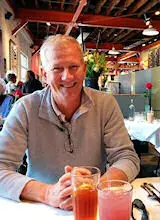
Now, those of you flush enough to not give a flying-rat’s patootie about $91 might have a little chuckle at my expense while you wait for another pitcher of cocktails the likes of which is beyond my means. But, you should really be whisking away that little paper umbrella and replacing it with a waving red flag. Because, if I messed up with a system I devised myself and which functioned flawlessly for a decade, just because I should have typed a 7 instead of an 8, then I am well and truly cooked.
And so are you.
This is because someday – maybe not today but someday – you will have your own “oh, shit” moment, as I just did, and realize it is now too late.
You are now a member of the Sensitive Group.
The punchline shouldn’t be “Death and Taxes”. It should be “Statistics and Taxes”. In this telling the worst possible thing that happens to you isn’t the last thing on the list. In fact, by the time you get to the realization that it isn’t even a joke, the haunting specter of Statistics will make a final entry in your tally, tear off the tape, and hand it to you. Forget the black cloak and scythe of the Grim Reaper. What you really needed to worry about was the stuff on the tape. Not a single item of which you had any control over.
Death, in all its inevitability, is just the result of all the insults that time, genetics, and bad life-choices have given us. From a surprisingly young age our bodies begin breaking down, our genes betray us, and all those oh-come-on-it’s-just-a-little-white-powder choices come home to roost. My own nemesis will be Twinkie the Kid. I can picture him rubbing his gloved hands together and saying “Gotcha”.
All this happens because of statistics.
And it all starts happening much earlier than you think. If you’re packing a Y-chromosome, starting at about age twenty-five your slide begins. Item by statistical item those insults pile up. Muscles begin to degrade, mitochondrial function – those little cellular-energy powerhouses – and everything else from your immune system to your cognitive functions start the long slide into the unrecognizable puddle of cellular pudding that waits for us all at the end.
This slide, too, is the result of statistics in the form of evolution. Countless genetic changes spread over billions of years relying on statistics to determine which spaghetti sticks to the wall and gets passed on to the next generation. Which sucks for you. Evolution figures that once you’re statistically beyond the age where you have passed your genes onto your progeny, it couldn’t care less if you live or die. Your job is done and you are free to succumb to the hardships of a life that is, historically, short, brutish, and nasty. All those diseases of old age, genetics, and environmental insults are free to have their way with you because you’re not of any use anymore.
Enter modern medicine.
We now have an unprecedented ability to keep people alive whose statistically provided package of chromosomes would have sent them for a sky burial decades ago. But, while the pills and surgeries and therapies and biohacking and whatnot may keep you up and functioning, the underlying physiological destruction that all those treatments mask are merely slowed, not stopped.
And you are still locked firmly in the Sensitive Group.
You’ll see the warnings in all manner of contexts: weather, pollution, disasters; statements come that something bad’s about to go down and the people to worry about this most are members of the sensitive group. Too hot or cold, the sensitive group goes first. AQI through the stratosphere? Bye-bye sensitive group. Disasters? The first ones piled into the back of the truck are the sensitive group.
And what can you do about it? Basically nothing. You can’t change your genes. You can’t change your past. Basically, all you can do is some minor tweaks going into the future. But current research suggests that even that might be outside of your control. Not only have the decisions you already made been set in stone but those you haven’t yet made are as well.
Your life, it turns out, is basically an E-Ticket ride you didn’t know you were getting on. Through the entire ride you trust others to make sure the tracks are maintained, the wheels greased, and that you’ve been told everything you need to know to take over the ride’s operation when the time comes.
All things that, you now realize, didn’t happen.
That may paint a pretty grim picture – sort of a fatalist fractal where no matter how closely you examine it, the picture remains the same – of what the future holds in store for you. The picture is inevitable in its scope, but not in its details.
And that’s where you come in.
Those minor tweaks I mentioned a few paragraphs ago are all that you’ve got to work with. They’re going to be limited to being “minor” only partly by us being products of everything we’ve done and experienced before. The rest is the result of what everything we’ve done and experienced before has already done to us. It’s the baked in part of the equation. This is why medical questionnaires ask if you smoke and if you have ever smoked. Baked. In. So whatever your particular conditions are the fault of – genetics, lifestyle choices, or an intimate enough familiarity with junk food that allows you to remember that there ever was a Twinkie the Kid – you have exactly no ability to change any of that.
My oh-shit moment came in the form of a ninety-one dollar tax bill. Clear evidence that my statistically plausible cognitive decline has begun. At some point, and as those doctors say, the earlier the better, we all have to come to an acceptance that the road we’re on is a literal dead end. There is, for all of us, some statistical something – a piece of junk in an artery, a cell with some scrambled DNA, a bad reaction to getting cut off in traffic, a final, frantic, heartbeat, or any number of a million other statistically random occurrences – that herald the end. We can’t get around it. But we have those tweaks in our power to make what our life is like between now and then, better.
And to delve into that we’re going to have to pause the statistics and look at our certain demise through the penetrating lens of economics.
Oh, come on, we haven’t done economics in a while. You knew it was coming.